Happy Halloween from Mik Ortho! Have a fun and safe day!

Thursday, October 31, 2013


Friday, October 4, 2013
National Orthodontic Health Month

To have the best and healthiest smile you can have.
Get it by relying on orthodontists’ expertise, which comes from their extensive education. After graduating from dental school, orthodontists go on for another two or more years of education just in orthodontics at an accredited orthodontic residency program. Only after this formal education can one be called an orthodontist. Only orthodontists are accepted for membership in the American Association of Orthodontists (AAO). Selecting a member of the AAO for orthodontic care is the public's assurance that they are selecting an orthodontist.
Orthodontists are dedicated to helping your teeth and jaws work in union so that you can speak, bite and chew comfortably and effectively. There’s a bonus. Teeth and jaws that work well tend to look good, too.
To both feel good and look good.
With care from an orthodontist, you have an expert who has been educated to understand how your teeth, your jaws and your facial muscles all work together. A healthy mouth contributes to your overall good health. Your appearance gets a boost, too.
To get the specialized treatment you deserve.
You trust your heart to a cardiologist, your skin to a dermatologist, your knees to an orthopedist. Like these specialists who study their specialty areas after their general medical education, orthodontists devote additional years of study to orthodontics after they graduate from dental school. And like their medical counterparts, orthodontists limit their practices to their specialty area. Orthodontists have in-depth experience in orthodontic care. They use their knowledge and skills to help you get the best results possible.
To get your bite right.
Your bite is a complex biologic system. Its components include up to 32 teeth, upper and lower jaws, gums and facial muscles. Your healthy bite is the orthodontist’s goal. The goal is met by making sure the separate elements are positioned for optimal performance. You enjoy the ability to bite, chew and speak well.
To solve the problem.
You may see six crooked front teeth. The orthodontist sees the cause of crooked teeth in three dimensions. Orthodontists use their education, experience and expertise to delve deep to discover the root of your orthodontic problem. Armed with a diagnosis that takes all factors into account, orthodontists can plan your solution—one that delivers a healthy, attractive smile and a lasting result.
To recommend the right treatment for you.
There are a lot of treatment options these days, from clear aligners to modern braces. They each have their uses, but only an orthodontist has the specialized knowledge to identify and plan for all the variables in your mouth. Orthodontists take your unique needs and wishes into consideration, too, when recommending the right treatment option for you. Orthodontists have knowledge of the full range of orthodontic appliance “tools.” They know what to use and when to use it because they work with these tools every day.
To address the big picture.
Sure, you want a dazzling smile. Your orthodontist wants that for you, too—and treatment results that last. You deserve the best—a good bite and a healthy, beautiful smile. Consult an AAO-member orthodontist for your life, your health, your happiness, your smile.
Thursday, August 29, 2013
Honors, Awards, and Holidays!
MIK ORTHO was recently included in "Fort Worth Magazine" August 2013 issue of Top Orthodontists. Our 6th year in a row! Fort Worth Child also voted us as a "Mom Approved Orthodontist" in their September 2013 issue as well. Our great families make this possible. Thanks for your support and have a safe Labor Day weekend!


Monday, July 15, 2013
What should I ask during my consultation?
What should I ask during my consultation?

If you have been thinking about orthodontic treatment to straighten teeth or correct jaw alignment, your first step is a visit to our office for an orthodontic consultation. During the initial consultation we will address your questions, concerns, and talk about a treatment plan that would best suit your case.
Because we want you to feel prepared and in charge of your orthodontic treatment decisions, consider the following questions when you visit for your initial consultation.
- If I do need some adjustments to my teeth, what options will I have besides braces?
- What kind of preparation is needed to get braces? How many visits will it take?
- How many visits will the treatment plan take?
- Can I expect any pain when getting braces?
- What are the factors that determine how long I have to wear braces?
- How will braces affect my lifestyle? Foods I can eat? Activities I can participate in?
- Who will be involved in the orthodontic work? Whom can I expect to see during my adjustment visits?
- What is the correct expectation in terms of outcome?
- How much will my orthodontic work cost? What is the “average” cost?
Your initial orthodontic consultation may just be the first step in relieving concerns about the appearance of your smile, or discomfort you are experiencing. Going in with the right questions will help you to understand the entire process, the state of the art treatment options available to you, and prepare you to do your part for your own dental health, ultimately leaving you with a great smile!
Copyright © 2012 Sesame Communications
Thursday, May 9, 2013
How long does orthodontic treatment take?
How long does orthodontic treatment take?

Your smile is totally unique, so the time you’ll need to spend undergoing orthodontic treatment will also be unique. Generally, orthodontic treatment will take about 18 months, and this is for good reason. During this time, your teeth will slowly move into their desired positions, leaving you with a great smile with as little discomfort as possible. After all, we don’t want to waste your time with treatment that won’t retain your smile for the rest of your life.
Of course, treatment time will vary depending on your specific situation. Very minor tooth movement may only take a few months to correct, while serious malocclusion (poor bite) may need more than two years to correct. Based on a thorough examination and complete clinical records we will be able to accurately estimate the time your treatment will take. But it’ll all be worth it in the end! Orthodontic care is not only about beautiful smiles, it dramatically improves your overall oral and gum health.
Has your child or teen visited our office for an orthodontic consultation? If not, please give us a call and let us help him or her begin the journey to a gorgeous smile!
Copyright © 2012 Sesame Communications
Friday, March 29, 2013
Fitting Braces Into Your Life

When you’re wearing braces, there are a few things you’ll have to adjust to get the optimal results in the shortest amount of time. If you have any questions about the “do’s and don’ts” of living with braces, feel free to ask our team at your next appointment.
Eating
When you have braces, there are a few types of foods that can damage your brackets and bend your wires, leading you to more appointments and longer treatment times. By simply avoiding sticky, chewy, crunchy, and hard foods, as well as foods like corn on the cob, your orthodontic experience will be smoother and will help prevent unnecessary emergency visits.
Cleaning
Maintaining a clean mouth takes focused attention, more so when you are undergoing orthodontic care. You’ll never believe the amount of food that can get lodged between your braces when you eat. Plaque buildup as a result of poor brushing and flossing habits can cause bad breath, or worse, tooth decay! It is so important to brush your teeth after every meal and floss every day. It may seem like a hassle, but it will all be worth it in the end!
Sports
Protecting your smile if you play sports is essential when you have braces, and mouthguards are an ideal solution to protecting your teeth and gums from injury. Some mouthguards work better than others when you’re wearing braces, so check with our team first. We can advise you on the right mouthguard if you plan on participating in any kind of contact sport.
Following these tips throughout your treatment will help ensure you get the results you want from your treatment in a timely manner. If you have any questions, please give our office a call. We are here to help!
|
Copyright © 2012 Sesame Communications
|
Monday, March 4, 2013
Questions about Orthodontics
| Misconceptions About Orthodontics |

While everyone understands that a dentist takes care of teeth, not everyone is aware of what an orthodontist does. This confusion sometimes leads to misunderstandings about what our practice does for our patients and how exactly we can help them. Let’s take a closer look at a couple of the myths and misconceptions about orthodontics.
Perhaps the biggest misconception about the orthodontist is that we’re just like your family dentist. The truth is, we are actually very different. While it’s true that both orthodontists and dentists care about helping you enjoy a lifetime of good dental and oral health, we go about achieving this goal in different ways. For instance, if you need to have a cavity filled, you probably won’t make an appointment to see us. Dentists are the health professionals to see if you’re concerned about a cavity or need a filling. Actually for any sort of restorative procedure, including crowns, bridges or veneers, a dentist is the correct professional to see. A dentist can also treat gum disease, tooth decay, toothaches, and other common oral health problems.
People see an orthodontist for very particular services. Most of the patients we see on a daily basis are here because they have braces, or they need to be fitted with braces or another form of tooth-straightening device. In other words, they consult an orthodontist when they are concerned about the alignment of their teeth. Correcting misaligned teeth not only results in the important esthetic benefit for a beautiful smile, but as importantly allows your teeth and gums to remain healthy as your bite is properly balances, and you can more easily care for your smile. As a child grows up, his or her teeth may grow in crooked or have gaps between teeth. This can happen for a number of reasons, so it’s important for an orthodontist to take a look at a child’s teeth at about seven years of age. At that age, it’s possible to detect any problems that have not become too advanced and more easily treat those. Your family dentist may also refer your child to an orthodontist once the adult teeth have fully grown in.
Another common misconception about orthodontists is that we only treat children. It’s true that when you visit an orthodontic clinic you’re apt to see a lot of young kids, but you’ll also see teenagers, college students, and adults. Because crooked teeth can be caused by a number of different factors, it’s entirely possible for someone to require orthodontic treatment at any age.
If you want to know more about the practice of orthodontics or what your orthodontist can do for you, we invite you to simply ask us. It’s best to get answers to your specific questions directly from the person who will be treating you. While you’re sure to find Internet resources helpful, there really is no substitute for the personal attention you’ll get during your appointment at our practice.
|
Friday, February 15, 2013

We know a lot of people enjoy a hot-brewed coffee or tea during their day. But what many don’t know is that both coffee and tea are especially tough on your teeth—especially during orthodontic treatment—because tannic acid (the substance that makes the dark color) etches into the pits and grooves of tooth enamel, and can stain your pearly whites.
So, if you can’t give up that morning cup o’joe, what can you do? We suggest rinsing with a glass of water after every cup. If you enjoy iced coffee or tea, drink your beverage with a straw so that tannins don’t make contact with your front upper and lower teeth. Even if you’re not a big coffee drinker, we encourage you to swish some water at the end of each meal. Water, after all, helps neutralize acids left in your mouth after eating and also reduces cavity-causing bacteria.
We hope this helps! Let us know if you have any questions!
|
Friday, January 25, 2013
Sports Safety
| Mouth guards and you |
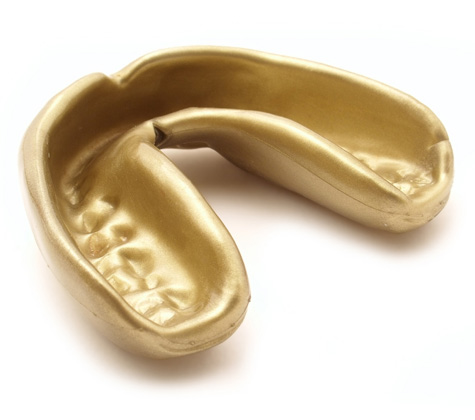
A lot of our patients play sports, and now is a great time to remind all of you to take care of both your mouth and appliances while participating in sports – especially contact sports such as soccer, football and basketball.
One of the most important pieces of sports equipment you can wear on the field is a mouth guard. A well-fitted mouth guard allows you to breathe and speak more clearly, in addition to protecting your mouth and appliances. Only by using a mouth guard can athletes avoid serious mouth and jaw injuries. The next time you’re in for an adjustment appointment, we encourage you to let us know if you’re playing or planning to play any sports. We can produce a mouth guard customized to your mouth that will work best for you.
Here are another five quick tips for keeping yourself safe during sports activities:
We hope this helps! You can always contact us if you have any questions!
|
Subscribe to:
Posts (Atom)